Hoi An Weather by Month (2026): Best Time to Visit & Travel Tips
.jpg)
Hoi An Weather by Month (2026): Best Time to Visit & Travel Tips
Hoi An is not only famous for its lantern-lit ancient streets but is also one of the most beloved destinations in Asia. In recent years, the ancient town has been consistently recognized by leading international travel publications, earning prestigious titles such as Top 3 Best Cities in Asia, Top 4 Best Cities in the World (2026), and "Most Welcoming Destination in Vietnam." These accolades reflect Hoi An's growing appeal to travelers from around the globe.
However, if you want to make the most of your trip, understanding Hoi An weather by month is something you should never overlook. Every month offers a unique experience. Some months are perfect for swimming at An Bang Beach, cycling through lush rice fields, or wandering the Ancient Town under clear blue skies. Others bring gentle rains that transform Hoi An into a peaceful and romantic destination, where lantern reflections shimmer on wet streets and life slows to a charming pace rarely found elsewhere.
In this guide, Ms. Tấm, a local travel expert from Truong Sa Tourist Vietnam DMC, provides a detailed month-by-month analysis of Hoi An's weather, explains the characteristics of each season, and shares practical travel tips to help you choose the best time to visit Hoi An in 2026.
Hoi An Climate - What You Should Know Before Your Trip

Hoi An has a tropical monsoon climate typical of Vietnam's central coastal region, with two distinct seasons: the dry season and the rainy season. Average annual temperatures range from 25°C to 29°C, rarely becoming extremely cold or excessively hot for extended periods. This pleasant climate makes Hoi An a year-round destination.
The most distinctive feature of the Hoi An climate is its rainfall pattern. From approximately September to December, the region is influenced by the Northeast Monsoon and tropical low-pressure systems over the East Sea (South China Sea). During this period, rainfall can last for several hours or even continue for consecutive days, especially in October and November. In contrast, the months from February to August are generally drier, sunnier, and offer calm sea conditions.
 Based on years of practical experience, Ms. Tấm recommends that travelers look beyond temperature forecasts when planning their trip. More importantly, consider the purpose of your journey. If you're planning a beach holiday, the dry season is undoubtedly the best choice. If you enjoy photography or prefer the tranquil atmosphere of the Ancient Town, the days following rainfall reveal a completely different side of Hoi An, with lantern reflections shimmering across the streets and significantly fewer tourists.
Understanding the weather in Hoi An will help you create a well-planned itinerary, avoid unexpected disruptions, and make the most of your time exploring Central Vietnam.
Hoi An Weather by Season - Climate Characteristics Throughout the Year

Rather than following the traditional meteorological calendar, Hoi An's tourism seasons can be divided into four distinctive travel periods.
Spring (February to April) is widely considered by local tour guides to be the most pleasant time of the year. Temperatures are comfortable, humidity is moderate, rainfall is minimal, and natural lighting is ideal for photography. During this period, the Ancient Town is lively without becoming as crowded as it does during the summer months.
From May to August, Hoi An enters its summer season. Temperatures often exceed 34°C (93°F), yet the skies remain clear and rainfall is limited. This is the ideal time to relax at An Bang Beach or Cua Dai Beach, or enjoy activities along the Thu Bon River. Travelers are simply advised to avoid prolonged outdoor sightseeing around midday.
The Hoi An Rainy Season begins noticeably in September and usually lasts until November. Rain becomes more frequent, occasionally accompanied by strong winds. Some streets within the Ancient Town may experience temporary flooding after prolonged heavy rainfall. Nevertheless, this is also the favorite season for many photographers, thanks to its soft natural light, peaceful atmosphere, and colorful lantern reflections after the rain.
December marks the transition into the cooler season. Rainfall gradually decreases, temperatures become more comfortable, and international visitors begin returning in greater numbers for the Christmas and New Year holidays. If your travel schedule is flexible, this is also a worthwhile time to consider visiting.
After organizing thousands of journeys for international travelers exploring Vietnam, Ms. Tấm has found that the "best season" is not always the "right season" for everyone. Families with young children generally prefer the stable weather from March to May, while couples often fall in love with the romantic atmosphere of the Ancient Town during the early rainy season.
 Hoi An Weather by Month - January to June
January - Cool Weather Perfect for Cultural Exploration
 January offers comfortable Hoi An weather, with average temperatures ranging from 20°C to 25°C. The final rains of the wet season have mostly subsided, leaving behind mostly cloudy skies mixed with gentle sunshine and relatively high humidity.
This is an excellent time to stroll through the Ancient Town, visit historic assembly halls, the iconic Japanese Covered Bridge, museums, and enjoy Hoi An's local cuisine without worrying about extreme heat. However, An Bang Beach may still experience stronger waves due to the Northeast Monsoon, making it less suitable for regular swimming.
If you plan to visit My Son Sanctuary, it is best to depart between 7:00 and 8:00 AM to enjoy the cool morning weather and beautiful lighting for photography.
February - One of the Best Months to Visit Hoi An
 For many travel experts, February marks the beginning of the finest season in the Hoi An Weather by Month calendar. Temperatures range between 21°C and 27°C, rainfall is minimal, and clear blue skies become increasingly common.
The festive atmosphere following the Lunar New Year remains vibrant, with traditional celebrations continuing throughout the town. Despite this, visitor numbers remain moderate compared to the peak summer season, making February an ideal time for couples, families, and first-time visitors.
Based on my experience as a tour guide, many travelers enjoy spending the morning exploring the Ancient Town, cycling through Tra Que Vegetable Village in the afternoon, and ending the day by watching the sunset at An Bang Beach. This itinerary is rarely affected by weather conditions.
March - Ideal Conditions for Every Outdoor Activity
 If I could recommend only one month to visit Hoi An, it would be March.
The weather is exceptionally stable, with temperatures ranging from 22°C to 29°C. Sunshine is abundant but not yet intensely hot, while lower humidity makes walking around the Ancient Town comfortable even for several hours.
March is also the perfect time for:
- Swimming at An Bang Beach
- Riding a basket boat through the Bay Mau Coconut Forest
- Cycling to Tra Que Vegetable Village
- Exploring My Son Sanctuary
- Taking a sunset cruise along the Thu Bon River
International travelers consistently rate March as one of the best months because it allows them to combine multiple outdoor experiences in a single day without worrying about heavy rain or excessive heat.
 April - The Golden Season for Visiting Hoi An
April continues to offer excellent travel conditions, with temperatures ranging from 24°C to 31°C (75°F to 88°F). Sunny skies, crystal-clear seawater, and very little rainfall make it one of the best months of the year.
During this time, An Bang Beach becomes increasingly lively. The sea is calm, the water is beautifully clear, and conditions are ideal for swimming, stand-up paddleboarding (SUP), or simply relaxing at one of the many beachfront clubs.
The Bay Mau Coconut Forest also reaches one of its most beautiful periods. Dry weather makes basket boat rides more enjoyable while significantly reducing insects compared to the rainy season.
 Photography enthusiasts especially appreciate April's soft morning light and golden sunsets. The Ancient Town's bougainvillea-covered streets, combined with warm afternoon sunshine, create the iconic scenery frequently featured in international travel magazines.
May - The Best Beach Season
 May signals the beginning of summer, yet the weather remains highly enjoyable if you plan your activities wisely.
Average temperatures range between 26°C and 33°C. Midday can be quite hot, but early mornings and late afternoons remain pleasantly comfortable.
This is the month when I usually encourage international visitors to spend more time at An Bang Beach or Cua Dai Beach. Clear water, gentle waves, and limited rainfall create excellent conditions for outdoor activities.
For those visiting My Son Sanctuary, I recommend departing before 7:00 AM to avoid the increasing heat later in the morning. Meanwhile, the Ancient Town is at its most charming from around 4:00 PM until evening, when the temperature cools, the sunlight softens, and thousands of colorful lanterns begin illuminating the streets.
June - Peak Summer Yet Still Worth Visiting
 June marks the beginning of the peak travel season for both international and domestic visitors. During this period, Hoi An Weather 2026 typically features temperatures between 27°C and 35°C, with long hours of sunshine.
Although midday temperatures can be quite high, June remains an outstanding month for beach activities. An Bang Beach reaches nearly ideal conditions, offering warm water, gentle waves, and excellent underwater visibility.
One piece of advice I often share with travelers is to organize their itinerary according to the weather. Spend the morning exploring My Son Sanctuary or the Bay Mau Coconut Forest. Between 11:00 AM and 3:00 PM, relax at your hotel or enjoy an air-conditioned café. Later in the afternoon, head to the beach, and finish the day by exploring the Ancient Town after sunset when temperatures become much more comfortable.
If your itinerary combines Da Nang and Hoi An in June, consider adding Ba Na Hills to your schedule. Located at a higher elevation, temperatures there are typically 7 to 10°C cooler than in the city center, providing a refreshing escape from the summer heat.
Hoi An Weather by Month - July to December
 July - Sunny Skies, Crystal-Clear Beaches, and Perfect for a Beach Holiday
July remains part of Hoi An's dry season, so Hoi An Weather is generally stable and predictable. Temperatures range from 27°C to 35°C (81°F to 95°F), with abundant sunshine and only occasional brief showers in the late afternoon.
This is one of the best months for a seaside vacation. An Bang Beach and Cua Dai Beach boast crystal-clear water, gentle waves, and excellent conditions for swimming, stand-up paddleboarding (SUP), or enjoying fresh seafood at beachfront restaurants.
Since temperatures can become quite high around midday, I usually recommend that international visitors begin their day early. After lunch, take a break before returning to the Ancient Town around 4:00 PM. As the sun sets, the temperature becomes more pleasant, lanterns illuminate the historic streets, and the peaceful atmosphere makes it the perfect time for a riverside stroll or a boat ride along the Hoai River.
August The End of the Dry Season with Excellent Weather
 According to the Hoi An Weather by Month calendar, August remains an excellent choice for travelers seeking a combination of sightseeing and beach relaxation. Average temperatures range between 27°C and 34°C (81°F to 93°F). The sea generally remains calm, although short afternoon showers occasionally occur.
This is also a wonderful time to visit the Bay Mau Coconut Forest, as mornings are still relatively cool. The lush nipa palms provide refreshing shade, while basket boat rides can be enjoyed comfortably under light breezes.
If you're planning to explore My Son Sanctuary, an early departure is still highly recommended to avoid the strongest sunshine later in the day. Meanwhile, Hoi An Ancient Town remains lively every evening, with cultural performances, lantern-lit streets, and a vibrant night market creating a memorable atmosphere.
September - The Beginning of the Rainy Season
 September marks the transition into the Hoi An Climate's rainy season. Temperatures become slightly cooler, averaging between 25°C and 32°C (77°F to 90°F), while rainfall increases noticeably.
At An Bang Beach, larger waves begin to appear, and the water gradually loses its crystal-clear summer appearance. On some days, warning flags may be raised due to rough sea conditions, so checking the weather forecast before planning beach activities is strongly recommended.
On the other hand, this is when the Ancient Town becomes significantly quieter. With fewer tourists, visitors can enjoy historical sites, cafés, and restaurants in a more relaxed setting. After brief showers, Hoi An reveals one of its most enchanting scenes, with colorful lanterns reflected on rain-soaked streets and the tranquil Hoai River flowing peacefully through the town.
October - Peak of the Hoi An Rainy Season
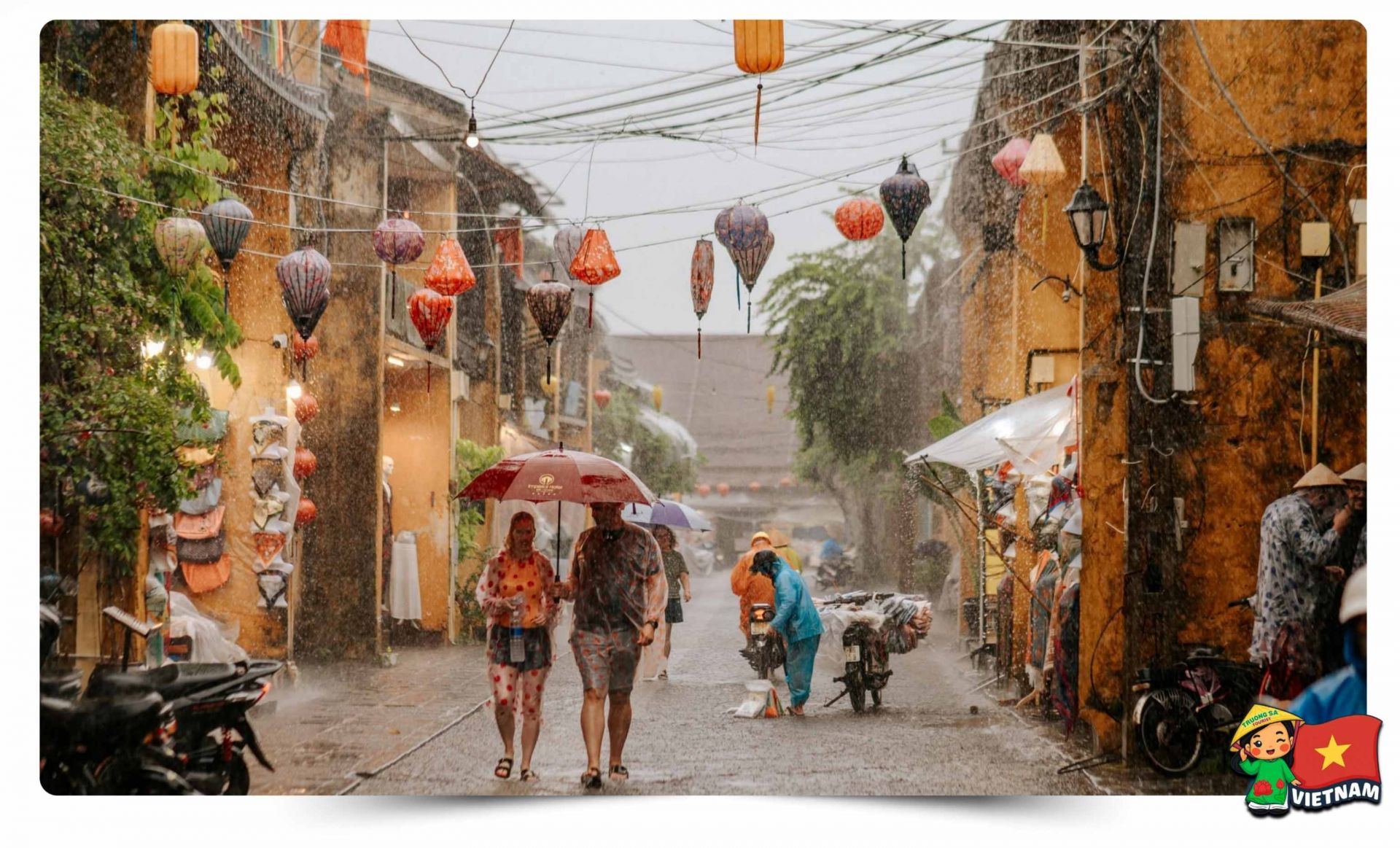 October is typically the wettest month of the year in Hoi An. Temperatures range from 24°C to 29°C, but humidity is very high, and rainfall can continue for several consecutive hours.
This is generally not the best time for beach activities or full-day outdoor sightseeing. Some riverside areas of the Ancient Town may experience temporary flooding following prolonged heavy rain, making it important to keep your itinerary flexible and prepare alternative indoor activities if weather conditions change.
However, if you're searching for a quieter, more authentic side of Hoi An, October offers a completely different experience. Many international photographers intentionally visit during this period to capture the timeless beauty of the Ancient Town beneath gentle rainfall, where lantern reflections and misty streets create an unforgettable atmosphere.
November - Rainfall Gradually Decreases
 By November, the Weather in Hoi An becomes more stable than in October, although occasional rain and tropical low-pressure systems may still affect the region.
Average temperatures range from 23°C to 28°C, creating cool and comfortable conditions. Sunny intervals following rainfall often provide exceptionally beautiful natural light, making it an ideal time for walking around the Ancient Town or relaxing at a riverside café.
From my experience, if you plan to visit Hoi An in November, I recommend staying two to three days rather than making a quick day trip. A longer stay allows greater flexibility should weather conditions change unexpectedly.
December - The Beginning of the Year-End Travel Season
 December signals the end of the rainy season. Temperatures typically range from 21°C to 26°C, with cooler weather and significantly reduced rainfall.
This is when many travelers from Europe, Australia, and North America begin their winter holidays, bringing renewed energy to Hoi An. Christmas and New Year decorations appear throughout hotels, restaurants, cafés, and the Ancient Town, creating a festive atmosphere.
Although An Bang Beach is generally not ideal for swimming because the sea remains relatively cool and occasional larger waves may occur, December is perfect for leisurely walking through the Ancient Town, sampling Hoi An's renowned cuisine, or combining your visit with nearby destinations such as Da Nang and Hue.

Best Time to Visit Hoi An - When Is the Best Time to Go?
If you have to choose just one period to visit Hoi An, I highly recommend February through April. This is when the weather offers the perfect balance of pleasant temperatures, low rainfall, and excellent sightseeing conditions. The skies are clear, the air is comfortable, and the weather is ideal for almost every activity, from exploring the Ancient Town and cycling through the countryside to visiting My Son Sanctuary and relaxing at An Bang Beach.
For beach lovers, April to August is undoubtedly the best time to visit. During these months, An Bang Beach enjoys its finest conditions, with crystal-clear water, gentle waves, and stable weather that is perfect for swimming and water sports. You can also join a Cham Islands snorkeling tour, where colorful coral reefs and rich marine life create one of the most unforgettable experiences in Central Vietnam.
If your interests focus more on culture, local cuisine, and experiencing everyday life at a slower pace, September through early December is also worth considering. Although you should prepare for occasional rainfall, you'll be rewarded with a quieter Ancient Town, fewer tourists, and a more authentic local atmosphere.
In reality, there is no single perfect month for everyone. The best time to visit depends entirely on your travel style and priorities. Choosing the season that best matches your interests will always lead to a more rewarding experience than simply traveling during the busiest holiday period.
 Suggested Da Nang - Hoi An - Hue Itineraries by Season
From February to August, the weather is ideal for exploring the highlights of Central Vietnam.
A well-balanced itinerary begins with two days in Da Nang, where you can visit Ba Na Hills, Son Tra Peninsula, and the Marble Mountains. Continue with two days in Hoi An to discover the Ancient Town, Tra Que Vegetable Village, the Bay Mau Coconut Forest, and An Bang Beach. Finally, spend one or two days in Hue, exploring the Imperial Citadel, Thien Mu Pagoda, and the royal tombs of the Nguyen Dynasty.
.jpg) Recommended Tours
Recommended Tours
►Central Vietnam Discovery Tour – 6 Days from Da Nang to Hue & Hoi An
►Central Vietnam Best Highlights 2026: 3-Day Da Nang, Hoi An & Ba Na Hills Private Package
►Discover Central Vietnam 2026 – 5 Days with Heritage Train
►Vietnam Wellness Retreat 2026 – 5-Day Creative & Mindful Reset in Da Nang
 If you're traveling between September and December, it's wise to keep your itinerary more flexible. Cultural attractions, museums, cooking classes, and local culinary experiences become excellent alternatives whenever rain affects outdoor sightseeing.
For first-time visitors to Vietnam, choosing an experienced local travel company can save considerable time while minimizing unexpected issues during the journey. Truong Sa Tourist Vietnam DMC offers a wide variety of travel experiences, including Northern Vietnam Tours, Central Vietnam Tours, Southern Vietnam Tours, Vietnam Cross-Country Tours, and private tours for both independent travelers and international groups.
In addition, the company provides a full range of travel support services, including Private Car, Airport Transfer, Fast Track Airport Service, and Vietnam visa assistance, ensuring a smooth and seamless travel experience from arrival to departure.
 FAQ – Hoi An Weather by Month
Which month has the best weather in Hoi An?
February to April is widely regarded as the best time to visit, thanks to pleasant temperatures, minimal rainfall, lower humidity, and ideal conditions for sightseeing and relaxation.
When is the Hoi An Rainy Season?
The rainy season generally begins in September and lasts until around December, with October and November typically receiving the highest rainfall of the year.
When is the best time to swim at An Bang Beach?
The ideal period is April through August, when the sea is clear, waves are gentle, and weather conditions are stable for swimming and water sports.
When is the best time to explore Hoi An Ancient Town?
The Ancient Town is beautiful throughout the year. However, considering weather conditions, February to April offers the most comfortable experience. Within a day, the period from 4:00 PM to 9:00 PM is especially magical, as temperatures cool down and thousands of lanterns illuminate the historic streets.
When is the best season to visit the Bay Mau Coconut Forest?
The most favorable period is February through August, when rainfall is limited, waterways remain calm, and basket boat rides are safer and more enjoyable.
Is summer a good time to visit My Son Sanctuary?
Yes. However, it is highly recommended to depart before 7:00 AM to avoid the intense midday heat and enjoy a more comfortable sightseeing experience.
Is Hoi An suitable for year-round travel?
Absolutely. Every season offers a different perspective of Hoi An. The dry season is perfect for beach holidays and outdoor adventures, while the rainy season appeals to travelers who appreciate peaceful surroundings, local culture, and photography.
 Understanding Hoi An Weather by Month will help you choose the travel period that best matches your interests and itinerary. If you prefer stable weather, beautiful beaches, and convenient transportation, consider visiting between February and April or April and August. If you're drawn to the peaceful charm of the Ancient Town and wish to avoid peak tourist crowds, the final months of the year can also provide unforgettable experiences with proper planning.
Having organized journeys for thousands of international travelers, we firmly believe that a successful trip isn't about choosing the single "best" month to visit. Instead, it's about designing an itinerary that aligns with the weather conditions and your personal travel style. That's exactly why Hoi An continues to leave a lasting impression on visitors, no matter which month of the year they choose to explore this timeless destination.

CONTACT INFORMATION
TRUONG SA TOURIST VIETNAM DMC
►Phone: +84 913 645 958
►Email: info@truongsatourist.net
►Facebook: Truong Sa Tourist Vietnam DMC
►TikTok: Truong Sa Tourist Vietnam DMC